
In the modern digital environment, companies are always seeking affordable means to make sales and increase their presence on the Internet. Affiliate marketing has been one of the strategies that has withstood the test of time and that thrives till today. It offers a win-win situation, whether you are a brand with the aim of increasing revenue or an individual with a desire to have affiliate channels of passive income.
This blog will deconstruct the concept of this marketing, its operation, the participants, the payment model, best practices, and the advantages it provides to businesses and affiliates.
What is Affiliate Marketing?
Affiliate marketing is an online marketing concept, which is performance-based and through which a company pays individuals or partners (also referred to as affiliates) to market their business through creating traffic, leads, or sales through their marketing efforts. In plain terms, affiliates promote goods or services and receive a commission if a person makes a purchase with the assistance of their affiliate link.
As compared to conventional advertisements, affiliates make payment to the company only after delivery of the results, and it is therefore an inexpensive strategy for businesses. To affiliate marketers, it offers a chance to make a commission without the need to produce goods, manage stock, or do customer service work.
How Affiliate Marketing works?
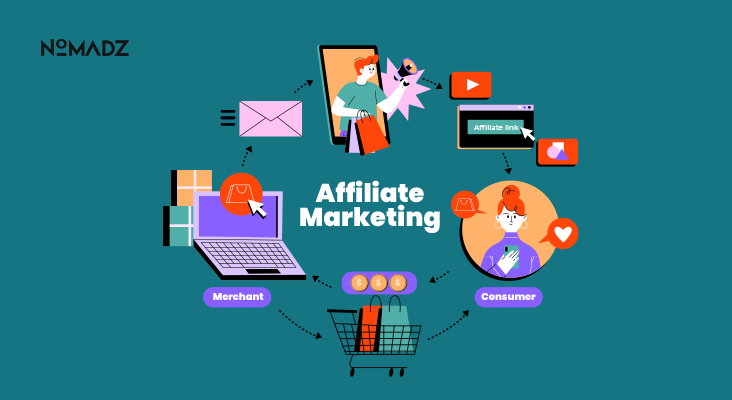
Essentially, affiliate marketing is a non-complicated process, and the number of players is not many; therefore, these are the merchant, the affiliate, and the consumer.
When an affiliate clicks on a special link and takes action (such as making a purchase or another action that the merchant wants the affiliate to do, like filling a form), the merchant will note this action and give the affiliate the required commission in accordance with the selected commission model.
Here’s a step-by-step breakdown of how this marketing works:
- Register on an Affiliate Program: Affiliates enroll in a program by a brand or a merchant.
- Receive Unique Tracking Links: Custom links are provided to the affiliate, which track conversions and clicks resulting from referrals.
- Market the Products: Bloggers, social media, email, podcasts, videos, and websites are all methods affiliates use to market such links.
- Customers Click and Buy: A customer can purchase a product or lead by clicking through a sale or lead, which earns a commission for the affiliate.
- Get Paid: Commissions are tracked and paid according to the program’s payment structure.
This transparent and performance-based approach ensures both businesses and affiliates benefit from real results.
Key players in Affiliate Marketing
In any affiliate marketing setup, there are three main parties involved:
- Merchant (Advertiser): The business or brand that sells a product or service and runs an affiliate program.
- Affiliate (Publisher): The individual or entity that promotes the merchant’s offerings for a commission.
- Consumer (Buyer): The end user who purchases through the affiliate’s link.
Some affiliate systems also involve an affiliate network, which acts as a middle platform connecting merchants and affiliates, managing tracking and payments.
Also Read: Best Affiliate Marketing Programs Tips for Beginners
Common Commission Models in Affiliate Marketing
One of the strengths of affiliate marketing is its flexibility in how affiliates get paid. Here are the most common payment structures:
Pay-Per-Sale (PPS)
This is the most popular model. Affiliates earn a percentage of the sale price or a fixed fee when a consumer completes a purchase through their affiliate link.
Pay-Per-Lead (PPL)
Affiliates receive a set payment when a user takes a specific action, such as signing up, registering for a trial, or submitting a form – even if they don’t buy anything immediately.
Pay-Per-Click (PPC)
Affiliates are paid based on the number of clicks their affiliate link gets – regardless of whether a sale happens. This model is less common due to higher fraud risk.
Pay-Per-Install (PPI)
Popular for software and app promotions – affiliates earn a commission for each completed installation.
Each model suits different niches and marketing goals. Understanding which structure aligns with your strategy helps you choose the most profitable affiliate programs.
Affiliate Marketing Channels
Affiliate marketers have many affiliate channels to promote products, and successful programs often diversify across multiple platforms.
Blogging
Blogging allows affiliates to create long-form reviews, tutorials, and comparison posts that rank in search engines. This provides lasting organic traffic.
Social Media
Platforms like Instagram, TikTok, Facebook, and Twitter help affiliates share affiliate links through posts, stories, and videos.
YouTube
Video content builds trust and offers a visual way to demonstrate products – ideal for reviews and how-to guides.
Email Marketing
Email marketing allows affiliates to nurture audiences with curated recommendations and targeted offers.
Diversifying across affiliate channels helps reduce dependence on any single platform and maximize revenue streams.
Benefits of Affiliate Marketing
Affiliate marketing offers significant advantages for both businesses and marketers.
For Businesses
- Low cost: Payment is based on performance, reducing upfront advertising spend.
- Extended reach: Businesses tap into affiliate audiences they might not reach otherwise.
- Scalability: Programs can grow with as many affiliates as needed.
For Affiliates
- Passive income: Affiliates can earn over time with evergreen content.
- Low startup costs: No need to create or stock products.
- Flexible work: They can choose their niche and promotional affiliate channels.
This mutually-beneficial model drives growth for both sides and keeps the affiliate ecosystem thriving.
Affiliate Marketing Strategies that work
Affiliate success doesn’t come automatically. To maximize earnings, consider these best practices:
- Choose a niche: Focus on a topic you’re knowledgeable about to build trust.
- Pick quality affiliate programs: Opt for products with good conversion rates and fair commissions.
- Provide valuable content: Write honest reviews and helpful guides.
- Disclose your affiliate relationships: Transparency builds trust with your audience.
- Use SEO: Target relevant keywords to attract organic search traffic.
By combining strategy and authenticity, affiliates can increase conversions and long-term income.
Common Tools for Affiliate Marketers
Although not mandatory, tools can help affiliates track performance and optimize results:
- Affiliate network dashboards (like Awin, CJ Affiliate, Impact) for tracking clicks and commissions.
- SEO tools (like Google Analytics, SEMrush) to monitor traffic and keyword rankings.
- Link management tools to shorten and organize affiliate URLs.
Choosing the right tools makes monitoring and scaling affiliate efforts easier.
Affiliate Marketing Mistakes to Avoid
While affiliate marketing offers great potential, mistakes can hold you back:
- Ignoring niche relevance
- Overloading content with links
- Choosing low-quality products
- Not disclosing affiliate relationships
- Relying on a single traffic source
Avoiding these common pitfalls improves credibility and long-term growth.
Conclusion
Affiliate marketing is one of the most powerful growth channels available today, for brands and marketers alike. Its performance-based structure makes it cost-effective for businesses, while the low startup cost and passive income potential make it attractive for individuals. With the right strategy, niche focus, and commitment to authenticity, it can become a long-term revenue engine.
FAQs
What is affiliate marketing?
Affiliate marketing is promoting another company’s products or services online to earn a commission for each sale or action.
How does affiliate marketing work?
It works by letting third parties promote products and earn commissions when their referrals generate sales or leads.
Who is an affiliate marketer?
An affiliate marketer earns commissions by marketing another company’s products or services to their audience.
Is affiliate marketing an eCommerce strategy?
Yes, it’s an eCommerce sales strategy where partners promote products in exchange for commission.
Can beginners start affiliate marketing easily?
Yes, beginners can start by promoting products through blogs, social media, or content platforms with affiliate links.